
The National Pension System (NPS) added 21.5 per cent fewer fresh subscribers under the corporate segment in 2023 compared to the preceding year. Government officials and experts attribute it to the higher exemption limit of income tax of Rs 7 lakh announced in the FY24 Budget that no more requires employees under this income bracket to opt for NPS for tax-saving purposes. Data collated from the Ministry of Statistics and Programme Implementation (MoSPI) reveals that the corporate component is voluntary in nature and saw 158,212 new subscribers in 2023 compared to 201,517 during 2022.
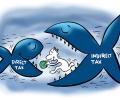
With the implementation of the goods and services tax less than 75 days away -- assuming July 1 as the roll-out date -- Sudipto Dey provides a guide to how businesses can navigate the transition.


The government should scrap the windfall profit tax on domestically produced crude oil as the levy is adversely impacting the capex-intensive exploration of oil and gas, the industry said in its recommendation for the forthcoming annual Budget. India first imposed windfall profit taxes on July 1, joining a growing number of nations that tax super normal profits of energy companies. At that time, a Rs 23,250 per tonne ($40 per barrel) windfall profit tax on domestic crude production was levied.
Investments of up to Rs 100,000 in tax-saving funds are eligible for deduction under Section 80C of the Income Tax Act. This has opened up a new spectrum for investors while conducting their annual tax-planning exercise.

Many senior citizens fail to disclose certain incomes like interest, commissions, or dividends in their ITRs.

The bill to nullify retrospective taxation offers a fair solution within the framework of Indian law and Parliamentary sovereignty to companies which have been subjected to such demands, Finance Secretary T V Somanathan said on Thursday. Finance Minister Nirmala Sitharaman introduced 'The Taxation Laws (Amendment) Bill, 2021' in the Lok Sabha that seeks to withdraw tax demands made using a 2012 retrospective legislation to tax the indirect transfer of Indian assets. The Bill provides for the withdrawal of tax demand made on "indirect transfer of Indian assets if the transaction was undertaken before May 28, 2012 (i.e. the day the retrospective tax legislation came into being)."

The one national GST unifies the country's $2 trillion economy and 1.3 billion people into a common market, an exercise that took 17 tumultuous years.
Taiwan in 1951 came up with an ingenious plan to improve tax compliance: citizens taking receipts for purchases could use them as lottery tickets. Customers were incentivized, and businesses found it hard to evade taxes. The plan's success prompted other countries, Slovakia and Greece among them, to launch similar initiatives. India doesn't seem to find the need yet for such schemes amid surging goods and services tax (GST) collections.

GST would make compliance easier for big businesses, but hurt small scale industries., says SJM

Cars and two-wheelers attract 28% GST and a cess in the range of 3-22%, taking the effective tax rate to up to 50%.

Companies in China, South Korea and Indonesia pay 25 per cent tax, while those in Malaysia pay 24 per cent. Only Japan has a higher tax than India at 30.6 per cent. Hong Kong has the lowest corporate tax rate of 16.5 per cent while Singapore has 17 per cent rate and Thailand and Vietnam levy 20 per cent tax on companies.

Anil Rego, CEO, Right Horizons, answers your personal income tax queries.

OSAT majors have concerns about India's ability to provide a stable, predictable, and lasting policy environment for years to come, which is key for making a decision in a capital-intensive business.

The Budget proposal will help startups with better incubation, talent and capital

Market reaction to the Union Budget was overall neutral. The income tax "gift" wasn't enough to move the needle. There was some apparent rationalisation of Customs duty structure as well as cuts on import duties of some key components for the telecom and IT industry and duty cuts on vehicle imports. Other proposals related to development of agriculture and rural economy and renewables seem to be generally positive.

So tell us, does Sitharaman's 7th consecutive Budget deserve cheers or boos?

P K Mishra, a retired IAS officer of the Gujarat cadre, is currently serving as the principal secretary to the prime minister.

The gross tax revenues have touched 65 per cent of the Budget estimates at Rs 17.81 lakh crore during the first eight months of the current fiscal till November, propelled by corporate and personal income tax mop-up, according to the Economic Survey 2022-23 presented in Parliament on Tuesday. The survey, authored by Chief Economic Advisor V Anantha Nageswaran, said the 'substantial reforms' in India's taxation ecosystem post-2014 and policy reforms have removed the distortionary incentives from the economy. Reforms like GST, reduction in corporate taxes, exemption of sovereign wealth funds and pension funds from taxes, and removing Dividend Distribution tax have reduced the tax burden on individuals and businesses.

US President Donald Trump on Thursday addressed the World Economic Forum where he offered business leaders low taxes if they manufacture their products in the US, while threatening them with tariffs if they don't. Addressing the forum's Annual Meeting in Davos through video conferencing, Trump also said he is going to ask Saudi Arabia and OPEC to bring down oil prices and asserted that if prices come down Russia-Ukraine war will end immediately.

'We will start reaching out to researchers, academics, and experts on AI from top universities and companies from across the world.'

Eminent economist Arvind Panagariya has said India is on the cusp of returning to a high growth trajectory and voiced confidence that the country will become the world's third-largest economy by 2027-28. Currently, India is the fifth largest economy "so it's another five years.We are already in (the year) 2023. "So 2027-28, India should be the third-largest economy," Panagariya, Columbia University Professor and former Vice Chairman of NITI Aayog, told PTI in an interview in New York.

The Income-Tax (I-T) Department nowadays provides pre-filled forms to make the filing of income-tax return (ITR) easier. Nonetheless, you must have a number of documents handy at the time of filing return so that you can cross-check the data in the pre-filled form. "Filing ITR doesn't require you to upload any document. But in case an assessing officer makes an inquiry, you will need to present documents and certificates as proof," says Deepak Jain, chief executive, TaxManager.in.

'...I'll say this to my fellow Americans, the more ties that we have to more Indians and the more ways we can find to grow our economic and educational exchanges, the stronger America and India.'
GST collections rose 12 per cent to over Rs 1.61 lakh crore in June, the finance ministry said on Saturday. The gross GST collection has crossed Rs 1.60 lakh crore mark for the fourth time since the roll-out of the indirect tax regime six years ago on July 1, 2017. The average monthly gross GST collection for the first (April-June) quarter of the 2021-22, 2022-23 and 2023-24 are Rs 1.10 lakh crore, Rs 1.51 lakh crore and Rs 1.69 lakh crore, respectively, the finance ministry said in a statement.

'Asset allocation should be driven much more by long-term factors rather than the market scenario at any particular point in time.'

Rising energy demand could tilt India's energy basket towards fossil fuels from coal to oil, natural gas.
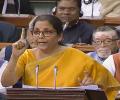
'The economy needed 3 or 4 major fixes. The major one was, of course, the direct tax structure, but we ended up complicating the existing convoluted tax structure,' says M R Venkatesh, chartered accountant and lawyer.

The best solution would be the one followed in 2018 -- allow cost indexation until March 31, 2024 -- but exit at any time. The second-best alternative would be to allow time until March 31, 2025 for investors to exit their investments under the old indexation regime, points out Harsh Roongta.

Taxing the rich will fetch nothing; only votes, argues Debashis Basu.

'As negotiations continue, the path forward demands not only diplomatic skill, but also vigilance against legal asymmetries embedded in America's trade playbook.'

The government said that far from targeting any US entity, the purpose was to ensure fairness, healthy competition, and to exercise the ability of governments to tax businesses having a nexus with the Indian market through digital operations.

Led by a new generation of entrepreneurs, India's family offices are shifting from traditional investments in physical and tangible assets like real estate to investing in technology, healthcare, and retail stocks. This new wave of family offices is engaging in stock market investments, including pre-IPO placements and secondary market operations. "Born into a world of technology, the next generation, especially those born after 2000, view technology as equally crucial as finance for running a business.

Businesses across the country may soon be required to issue electronic invoices, or e-invoices, directly to consumers for the sale of goods and services. The Goods and Services Tax (GST) Council, in its forthcoming meeting on Monday, is expected to discuss extending the e-invoicing mandate to cover business-to-consumer (B2C) transactions. Currently, e-invoicing is compulsory for businesses with a turnover of Rs 5 crore and above, but only for their business-to-business (B2B) transactions.
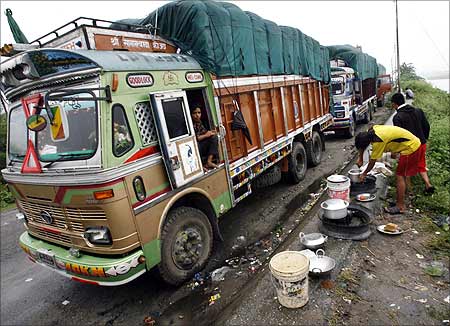
There could be a strong incentive for tax payers to avoid the higher tax burden.

'A mid-year review makes the end-of-year financial review manageable and less stressful.'

The Union Cabinet on Wednesday approved changes to GST laws to levy a 28 per cent tax on the full face value of bets in online gaming, casinos and horse race clubs, sources said. The amendments to the Central GST (CGST) and Integrated GST (IGST) acts, which were approved by the GST Council last week, are likely to be introduced in the ongoing monsoon session of Parliament, which will end on August 11. The GST Council in its 51st meeting on August 2 recommended amendments to the Schedule III of the CGST Act, 2017, to provide clarity on the taxation of supplies in casinos, horse racing and online gaming.
